The question “how to bypass garage door sensor” often comes up when a door will not close. But bypassing the sensors removes a key safety feature and can put people, pets, vehicles, and belongings at risk. First check for simple sensor problems, such as a blocked beam or dirty lens. If the door still fails, get help rather than disabling the system.
Table of Contents
- What do garage door safety sensors do?
- Why is bypassing a garage door sensor dangerous?
- What do the garage door sensor lights mean?
- How can you clean and realign garage door sensors safely?
- What else can stop a garage door from closing?
- When should you stop troubleshooting and call a garage door technician?
- What should you remember when a garage door sensor fails?
What do garage door safety sensors do?
Garage door safety sensors help stop a door when something crosses its path. These small devices are often near the floor, on each side of the opening. One sensor sends a light beam to the other. If something blocks the beam, the opener should stop or reverse the door.
This setup is called a photo-eye. A photo-eye uses a light beam to check whether the doorway is clear. You may not see the beam, but small lights on the sensors can show if they are lined up. Sensor styles and light patterns can vary by opener model, so the same light may not mean the same thing on every system.
Sensors help protect people, pets, and property. A child, pet, bike, or storage bin may be in the door’s path without a driver seeing it. If the beam is blocked, working sensors can help keep the door from closing onto that item. They are a safety feature, not just a cause of an annoying delay.
In Rolla, a garage door may start to close and then reverse. It may also refuse to close at all. A blocked beam or a sensor out of line can cause this. But other parts of the system can cause similar signs, so the door’s action alone does not prove a sensor has failed.
Rolla Garage Door Repair can help explain why a door will not close and which checks are safe. Leave the sensors in place so they can do their job. Do not cover, unplug, or try to trick a sensor to make the door close.
Why is bypassing a garage door sensor dangerous?
Bypassing a garage door sensor is dangerous because it removes a safety check. Without that check, the door may keep closing when a person, pet, or object is below it. It may also damage belongings or make an existing door problem harder to spot.
A door that closes after the sensors are disabled may seem fixed. But it only shows that the opener no longer gets the same stop signal. The first problem may still be there. The door could also have trouble with its tracks, springs, cables, or opener.
Garage doors are heavy, and their moving parts can cause serious harm. Springs and lift cables carry strong tension. They help raise and lower the door, but a damaged part may move without warning. The sensors work apart from those parts, so making them inactive does not fix a mechanical fault.
Some people search for how to bypass garage door sensor because they need to move a car or secure a building. That need can feel urgent, but disabling the safety feature can make the risk worse. If the door is stuck open, keep people and pets away from the opening. Do not stand under a door that looks uneven or unstable.
The safer choice is to find what blocks the beam or have a technician check the system. Never tape over a sensor, cut its wires, or use a trick to force the door down. A proper repair should restore safe use, not hide a warning. Garage door safety matters even when getting the door shut feels urgent.
What do the garage door sensor lights mean?
Sensor lights can offer clues, but their meaning depends on the opener model. A steady light may mean the sensor has power or sees the other sensor. A blinking or dark light may point to a blocked beam, poor alignment, a loose connection, or a failed part. Check the opener manual for the light pattern that fits your model.
Check the lights without touching wiring
First, look at both sensor lights from a safe place. Check for something between the sensors, such as a bin, broom, or leaves. If one light is off or blinking, note which one and whether the other stays steady. That detail may help you explain the problem to a technician.
Do not pull wires or open the opener to check a light. Damaged wires, bare metal, or a burning smell are reasons to stop. Different brands and models may use different colors and blink patterns. A pattern described online may not match your opener.
A sensor light can look normal while another part of the door has a problem. The opener may stop because of a setting, a door that catches in its track, or a mechanical fault. Lights are clues, not a full answer. If the door still reverses after the sensor area is clear, the cause may be elsewhere.
Rolla Garage Door Repair can help tell a sensor warning from a wider garage door opening problem. The opener manual may explain its lights. If you cannot find the manual, the maker’s website may have information for your opener model.
A light that looks normal does not prove the whole door is safe. If the door shakes, hangs crooked, makes a harsh sound, or stops partway, leave it alone and arrange a check. Do not keep pressing the opener to see if the problem goes away.
How can you clean and realign garage door sensors safely?
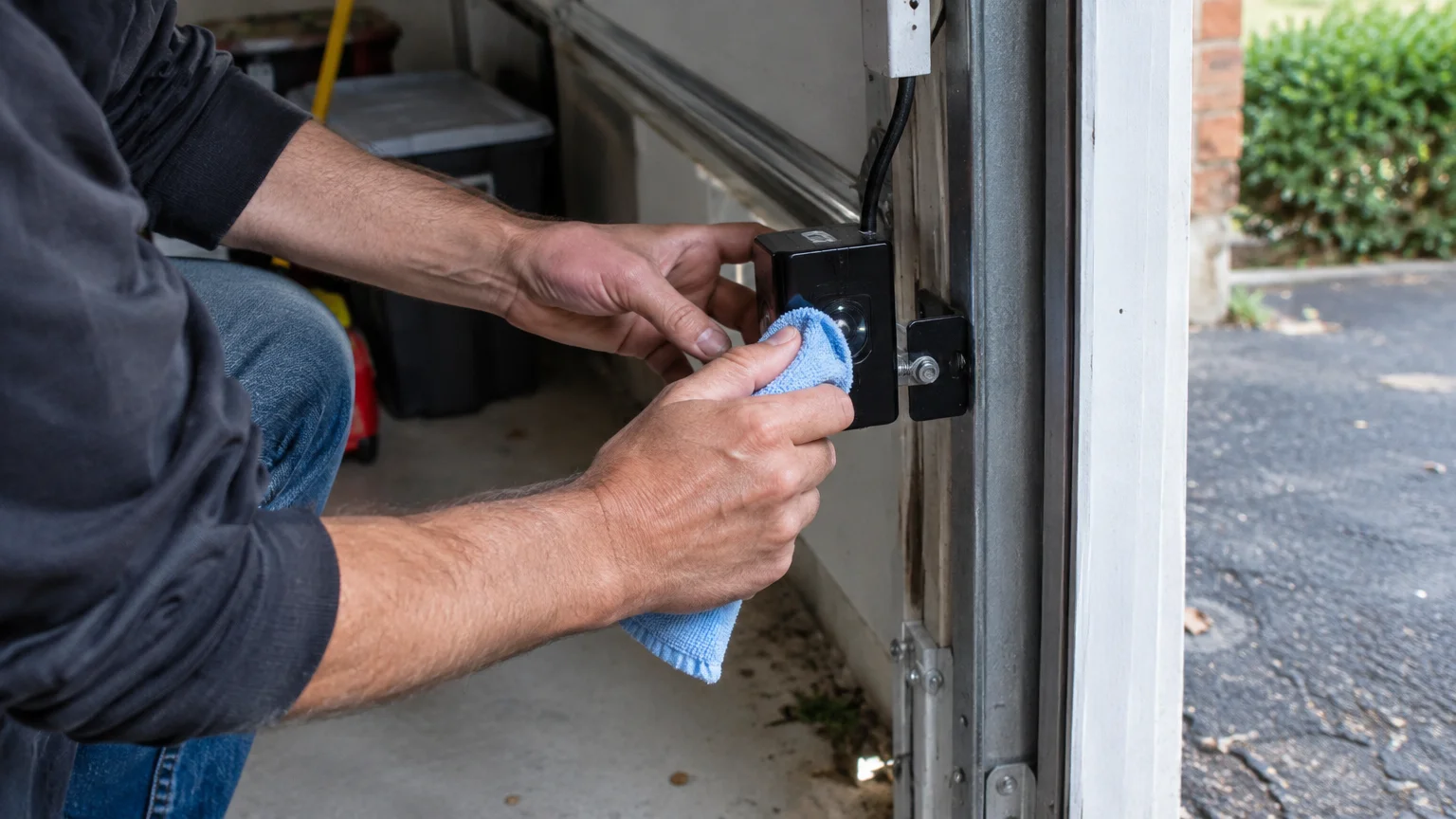
A homeowner can safely clear objects and gently clean the sensor lenses. You can also look to see whether either sensor seems out of line. These checks do not require touching springs, cables, brackets, or wires. Keep your hands and tools away from the moving door while you look.
Clear the path and clean the lenses
- Make sure the door has stopped. Keep children and pets away from the opening.
- Remove objects and loose dirt from between the sensors. Do not move a heavy item if it could make the door shift or fall.
- Gently wipe each lens with a soft, dry cloth. Do not spray liquid into a sensor or pull its wires.
Check alignment and test safely
- Look at the sensors from the front. They should face each other and sit at about the same height. If one looks bent, loose, or damaged, do not force it into place.
- If a sensor is only slightly turned and its bracket is sound, gently nudge it until both lights match the pattern in the opener manual. Do not loosen brackets or change wires.
- Test the door only when the area is clear. Use the opener as the manual says and watch from a safe place. Stop if the door reverses, stops, or acts in a new way.
These checks are a good first step in Rolla or elsewhere, but they cannot fix broken parts. Do not adjust spring tension, lift cables, bottom brackets, or the opener’s force settings. That work can put you close to heavy parts or parts under strain. If cleaning and a careful look do not help, a technician can check the system instead of guessing.
What else can stop a garage door from closing?
A blocked or misaligned sensor is only one reason a garage door may not close. An object, damaged wire, opener setting, or mechanical fault can also stop or reverse a door. What the door does can offer clues, but it cannot confirm the cause on its own.
First look for items in the door’s path and dirt on the sensor lenses. Then note what happens when the opener runs. A door that starts down and quickly reverses may have a sensor issue. A door that jerks, sags, grinds, or stops at the same point may have a track or door problem.
A loose or damaged wire can break the sensor signal. Do not handle bare wires or try to join them. The opener may also have a fault or need service. If its lights flash or it makes an unusual sound, check the manual for what that signal may mean. Do not take the opener apart.
A door that is off track, uneven, or hard to move by hand may have a mechanical problem. Do not try to lift or guide a heavy, crooked door back onto its track. Garage Door Off Track Repair and Garage Door Opener Repair may be the right kind of help. A technician can check the door and opener as one system.
Questions about a damaged panel or loose cable also need care. Panel work may change the door’s balance, while cables can carry strong tension. Garage Door Cable Repair is work for a trained technician. If the door will not open or close, describe what you see instead of guessing which part to replace.
The garage door spring is another part that should not be adjusted by a homeowner. Springs help lift the door and can be under high tension. A spring that breaks or moves the wrong way can cause severe harm. A best garage door setup is not just a door that moves; its safety parts and moving parts must work together. A garage door seal at the bottom may help close gaps, but it cannot fix a sensor or a door that is off track.
When should you stop troubleshooting and call a garage door technician?
Stop troubleshooting if the door looks unstable, a part is damaged, or safe cleaning and visual checks do not solve the problem. A technician should check damaged wires, tracks, springs, lift cables, bottom brackets, and opener faults. These parts can move with force or hold the door’s weight.
Do not touch a spring, cable, or bottom bracket. Do not try to fix a panel if the door is bent or under strain. Spring and cable work needs the right tools and training. A wrong move can cause severe injury or let the door fall. A trained technician can find the cause and choose a safe repair.
If the door is stuck open, keep people and pets away from the opening. Move a vehicle only if you can do so without walking under an unstable door. Keep valuable items out of view if possible. Do not pull the door down by hand if it is crooked, heavy, or partly off its track.
If the door is stuck closed, do not force it open or keep pressing the opener. Repeated attempts may add strain or make a small problem worse. Use another safe way to leave the building if one is available. When you ask for help, say whether the door is open, closed, crooked, or making a new sound.
For property and business owners, a door that will not secure an opening needs prompt care. Rolla Garage Door Repair serves Rolla and nearby places, including Northwye, Schuman’s Addition, Doolittle, St. James, Edgar Springs, and Dixon. In Rolla, choose help when the problem goes beyond cleaning and a simple visual check. Do not leave an unsafe door in use while waiting for a repair.
What should you remember when a garage door sensor fails?
A garage door sensor helps stop a door when its path is blocked. If the door will not close, keep the sensor working instead of trying to bypass it. Clear objects, gently clean the lenses, and check the opener manual for the lights. Stop if the door or its parts look damaged.
Key takeaways
- Safety sensors help protect people, pets, and property from a closing door.
- A blocked beam, dirty lens, or poor alignment may stop the door from closing.
- Sensor light patterns vary, so check the manual for your opener model.
- Never handle springs, cables, bottom brackets, damaged wires, or an off-track door.
- If simple checks do not help, leave the door alone and arrange an inspection.
Frequently Asked Questions
Can a garage door close if one safety sensor is not working?
Some openers may act in different ways when a sensor has a fault, but forcing the door to close is not safe. Do not disconnect or cover a sensor. Keep people and pets clear, check for a simple blockage, and ask a technician to inspect the system if the door still will not work.
Can the sensors stop a garage door from opening, too?
Sensors mainly help prevent a door from closing onto something in its path. A door that will not open may have another problem, such as an opener fault, power issue, or mechanical fault. If it is crooked or stuck, do not force it. Have the door checked.
Can a garage door be replaced without replacing the opener?
Sometimes an existing opener may work with a new door. It depends on the opener’s condition and whether it suits the new door. A technician can check the opener, safety features, and door setup together. Do not assume an old opener is safe or right for the door without a check.
Why do garage door cables come loose?
Cables may come loose if a door is out of balance, a cable or drum is damaged, or another part fails. The cause may be hard to see, and the cable can be under strong tension. Do not handle it or try to put it back. Ask a technician to check the door.
Can a homeowner fix a garage door panel?
A small mark may not affect how the door works, but a bent or cracked panel can affect balance and movement. Replacing a panel may also mean working near parts under tension. Do not remove a panel from a loaded door. Have a technician decide if repair or replacement is safe.
Conclusion: A sensor warning is a reason to check for a simple problem, not remove the safety system. If cleaning and a careful look do not restore normal use, leave the door in place and get help. This is safer than trying to force a close.
If you are unsure what is wrong, have the system checked before the problem gets worse. Contact us through Get in touch today, and Rolla Garage Door Repair can help you understand the next safe step.